Europe Cannot Engage With India Only Through a European Lens
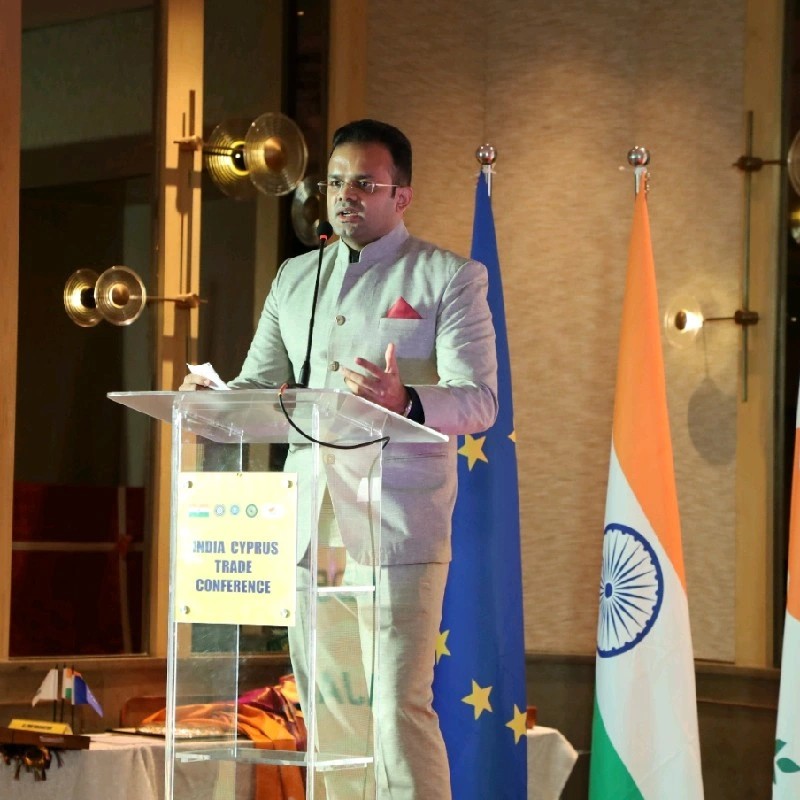
Having spent nearly two decades engaging with European institutions, policymakers, diaspora communities, businesses, and civil society across different parts of Europe, one thing I have increasingly realised is this: Europe cannot engage with India only through a European lens.
India is not just a country of 1.4 billion people. It is a civilisation shaped by centuries of history, emotions, contradictions, wounds, resilience, and aspirations. Many Europeans genuinely wish to understand India better, and many do make sincere efforts. But there are still moments when certain approaches fail to fully recognise how deeply history continues to shape public perception in India even today.
The recent episode during Prime Minister Narendra Modi’s visit to Norway reminded me of this once again.

Of course, India has many domestic challenges, democratic debates, and governance concerns that deserve discussion. No serious Indian denies that. Indians themselves debate these issues intensely every single day. But when the person holding the highest elected office in India or diplomats from India is perceived by many ordinary Indians as being treated disrespectfully during a visit to a European country, the reaction within India is often very different from what some European commentators and even sections of Indians themselves may expect.
What many fail to understand is that such moments often do not weaken the image of the Prime Minister or the ruling establishment. In many cases, they strengthen them emotionally among ordinary Indians.
This is because historical memory still matters deeply in India.
Many Indians continue to carry inherited memories, directly or indirectly, of how Indians were viewed and treated during centuries of colonial rule. India had its own social divisions and caste realities long before European powers arrived. However, colonial systems often institutionalised and amplified many of these divisions as part of broader strategies to control the country and exploit its resources. The scars of that period did not disappear with independence. Some of them still exist psychologically and emotionally across generations.
The subsequent controversy surrounding a Norwegian newspaper portraying the Indian Prime Minister through an old “snake charmer” stereotype only deepened these feelings for many Indians. In Europe, some may view such imagery as satire, political commentary, or media freedom. But many Indians see something else in it; echoes of old colonial narratives through which India and Indians were historically stereotyped and looked down upon by sections of Europe and the West.
Today, younger generations in India are also revisiting history in ways previous generations could not. Through digital platforms, documentaries, podcasts, AI tools, and social media storytelling, many are rediscovering how their forefathers lived, suffered, and were perceived during colonial rule. There is a growing desire among young Indians to understand what really happened to previous generations. Healing from such long historical experiences naturally takes time.
So when many ordinary Indians see repeated international narratives that they perceive as disrespectful towards Indian leadership or India itself, they do not always see it as an isolated media moment. For many, it revives older emotions connected to identity, dignity, and historical memory. Whether one personally agrees with those perceptions or not, it is important to recognise that these feelings are very real and do influence public sentiment in India.

People who closely follow geopolitics also understand that certain questions during high-profile diplomatic visits are sometimes not asked in isolation. At times, they become part of larger media and political narratives designed to provoke reactions, shape perceptions, or create controversy for broader ideological or strategic reasons.
But what happens afterwards is equally important.
If such engagements are genuinely seen as inappropriate, insensitive, or counterproductive to long-term bilateral trust, then there should also be equal maturity among sections of the media, political leadership, and public voices within those countries to acknowledge and condemn it. Silence from influential stakeholders often creates an impression among ordinary Indians that these actions are not isolated incidents, but part of a broader accepted narrative or mindset. Whether that perception is fair or not, it does shape how India increasingly views parts of the Western discourse around it.
Once such moments begin getting amplified repeatedly through sections of media and political ecosystems, the deeper cultural and historical sensitivities involved are often overlooked. In countries like India, where national dignity and historical memory remain emotionally significant subjects, these narratives can end up being interpreted very differently by ordinary citizens than perhaps originally intended.
This is why cultural sensitivity matters greatly in Europe–India engagement.
If Europe genuinely wishes to build stronger long-term trust and partnerships with India, then engagement cannot be driven only through media optics, moral positioning, or public confrontation. It also requires a deeper understanding of Indian psychology, historical memory, national pride, and how ordinary citizens emotionally interpret such events beyond elite policy circles and social media narratives.
India and Europe need each other strategically, economically, and geopolitically. But long-term partnerships are not built only through trade agreements, institutions, and policy frameworks. They are also built through mutual understanding, dignity, cultural sensitivity, and respect for how societies carry and remember their histories.
This article is written by
Sujit S Nair
Founder & Chairman Europe India Centre for Business & Industry
Disclaimer
The views and opinions expressed in this article are those of the contributor and do not necessarily reflect the official policy, position, or editorial stance of EIJ. EIJ provides a platform for diverse perspectives and informed debate. Responsibility for the accuracy of facts and interpretations rests solely with the author.


Comments