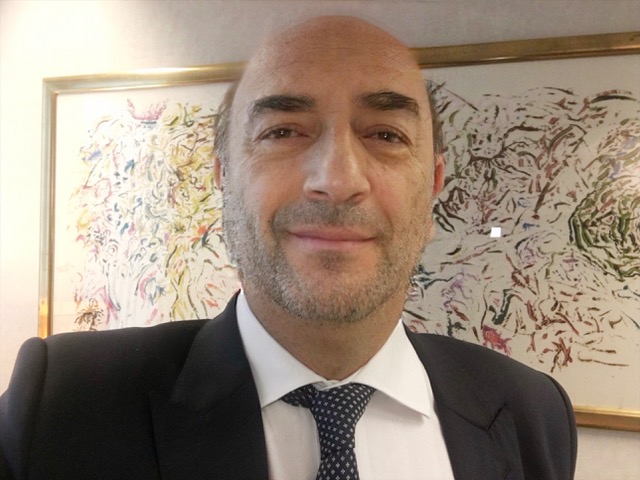
"Horizon Europe Could Turn EU–India Research into Industrial Partnerships," says Paolo Licandro, Former European Parliament Deputy Secretary General and Former Director of the EPP Group
For companies in aluminium, steel, recycling and energy-intensive manufacturing, India’s prospective association with Horizon Europe could open a new route to European technology partners, industrial demonstrators and cleaner production.
A research agreement may sound remote from factory floors, supply chains and investment decisions. India’s prospective association with Horizon Europe, however, could produce practical consequences for companies on both sides.
On 6 November 2026, the European Union and India announced the conclusion of negotiations on India’s association with Horizon Europe, the EU’s €93.5 billion research and innovation programme for 2021–2027. The European Commission envisages India’s association from January 2027.
I believe this represents a major opportunity for Indian industry and for the country’s scientific and industrial research. Once the association becomes operational, Indian organisations will not only gain improved access to European funding and research networks; they will also be able to combine India’s engineering expertise and manufacturing scale with European technologies, specialised research infrastructure and regulatory experience.
If companies use this opportunity to address real industrial challenges, Horizon Europe could help transform joint research into demonstrators, cleaner production processes and lasting commercial partnerships between India and Europe.

What Changes for Indian Companies
Indian companies can already participate in many Horizon Europe projects. At present, however, they generally have to finance their participation themselves, rely on complementary Indian funding or use another eligible source of finance.
Association would change this position for the parts of Horizon Europe covered by the agreement. Eligible Indian companies and research organisations would be able to compete for direct funding on terms comparable to those of European participants.
Funding would not be automatic. Projects would still need to satisfy the conditions of the relevant call and succeed in a competitive evaluation based on excellence, impact and the quality of implementation.
The difference is that an Indian company could become a funded project partner—or potentially coordinate a multinational consortium—instead of participating only as an externally financed organisation.
This could make European partnerships much more attractive for Indian manufacturers seeking technology, research capacity or access to industrial pilot facilities.
Why Aluminium and Steel Are an Early Test
Aluminium and steel illustrate what the agreement could mean in practice.
Both industries face growing pressure to reduce emissions, improve energy efficiency, increase the use of secondary raw materials and provide reliable environmental information about their products.
I would emphasise that a collaborative EU–India project could, for example, develop:
• Lower-carbon heat and electricity solutions for industrial plants;
• Improved sorting, treatment and recovery technologies for metal scrap;
• Digital systems for tracing raw materials and recycled content;
• Methods for measuring embedded emissions;
• Advanced materials and more energy-efficient production processes;
• Industrial demonstrators capable of testing technologies at commercial scale.
European partners could contribute research infrastructure, specialist technologies and experience with EU regulatory requirements. Indian partners could contribute manufacturing capacity, engineering expertise, operational data and opportunities to test solutions at industrial scale.
The result could be more than a research paper. A successful consortium could become the foundation for a commercial partnership, a joint investment, a technology-licensing agreement or a new European supply-chain relationship.

Research Could Support the Circular Economy
It is clear to me that this opportunity is particularly relevant to the aluminium recycling sector.
Under the EU Waste Shipment Regulation, exports of waste to non-OECD countries will face a more restrictive regime from 21 May 2027. Whether particular waste streams can continue to be exported will depend on the applicable EU procedures and on evidence that they can be managed in an environmentally sound manner in the destination country.
Horizon Europe cannot create an exemption from these legal requirements. Nor can participation in a research project guarantee future access to European aluminium scrap.
Research cooperation could nevertheless help companies and public authorities address some of the underlying problems.
Joint projects could improve facility performance, emissions monitoring, waste traceability, residue treatment and the quality of environmental data. They could also help demonstrate whether recycling facilities meet high environmental and technical standards.
This would not replace the formal assessment required under EU waste-shipment rules. It could, however, produce better technology and more credible evidence—both of which will be important for the future of circular material flows between Europe and India.
The Opportunity Goes Beyond Metals
The covered areas of Horizon Europe’s Pillar II include health, digital technologies, industry, space, climate, energy and the bioeconomy.
Existing EU–India cooperation already addresses subjects such as waste-to-renewable hydrogen, marine pollution and electric-vehicle battery recycling. Other promising fields include clean energy, water, advanced materials, semiconductors, biotechnology, artificial intelligence and industrial digitalisation.
This means that companies should not view Horizon Europe simply as a programme for universities. Many calls are designed to combine scientific expertise with industrial application, demonstration and market deployment.
The strongest consortium will often bring together companies, universities, research centres, technology providers and public bodies from several countries.
What Companies Should Do Now
Let me underline that European and Indian companies do not need to wait for the agreement to enter into force before starting to prepare.
They can already:
• Identify the industrial problem they want to solve;
• Assess whether it corresponds to a current or forthcoming Horizon Europe call;
• Find complementary European and Indian partners;
• Define the technology, data and pilot facilities each partner could contribute;
• Examine intellectual-property and commercialisation arrangements;
• Prepare an initial project concept and impact case.
My suggestion is that companies should start with a real operational need rather than with the search for a subsidy. A proposal based on a genuine industrial problem is more likely to attract suitable partners and produce commercially valuable results.
From Research Consortia to Business Relationships
I believe that the strategic value of India’s association with Horizon Europe will ultimately depend on how companies use it.
If treated only as another source of project funding, its impact may remain limited. If used to connect European technology with Indian industrial capacity, it could support cleaner manufacturing, stronger supply chains and new investment relationships.
For aluminium, steel, recycling and other energy-intensive industries, the agreement could create a structured route from a shared industrial problem to joint research, from research to demonstration and from demonstration to a lasting commercial partnership.
That is why the conclusion of the negotiations should be seen not as the end of a diplomatic process, but as the beginning of a new phase of EU–India industrial cooperation.
Companies, research organisations and public authorities wishing to examine the participation conditions and industrial opportunities in greater detail may request the free EU-INDIA Association Agreement Horizon Europe - eBriefing prepared by eEuropa.
This article is written by:-
Mr. Paolo Licandro
CEO of eEuropa Belgium and Editor of eEuropa
Former Political Adviser, Director and Deputy Secretary-General at the European Parliament
Disclaimer
The views and opinions expressed in this article are those of the contributor and do not necessarily reflect the official policy, position, or editorial stance of EIJ. EIJ provides a platform for diverse perspectives and informed debate. Responsibility for the accuracy of facts, opinions, and interpretations rests solely with the author.


Comments