India and Europe Team Up to Recycle EV Batteries

Updated: Aug 22

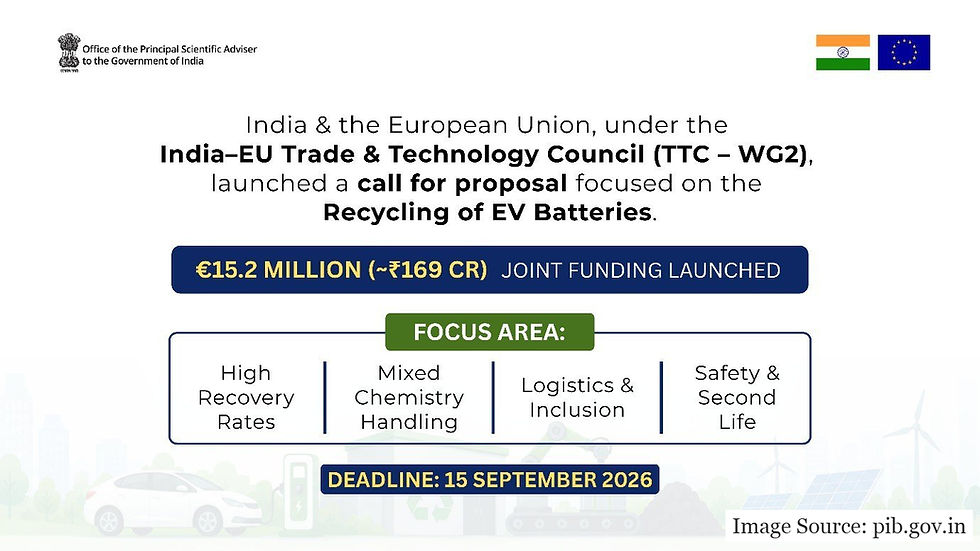
The world is switching to electric vehicles faster than ever, which means we are going to face a massive wave of used batteries soon. To tackle this, India and the European Union are working together to turn old electric vehicle batteries into valuable resources. Through a joint working group on green energy, the two regions have launched a call for proposals (Call Reference: HORIZON-CL5-2026-09-D2-04). They are inviting researchers and businesses to come up with better ways to recycle these batteries, keep critical materials available locally, and build a more sustainable economy.
Creating a Virtual Mine
As the need for clean transport grows, securing materials like lithium, graphite, cobalt, nickel, and manganese is crucial. Instead of relying entirely on imports, India and the EU want to keep these materials within their own borders. By recovering pure elements from used batteries, this joint effort is essentially creating a "virtual mine". The recycled material will feed directly into making new electric vehicle parts, reducing the need for outside resources and making the supply chain much stronger.
Why Recycling Matters Now
The economic and environmental reasons for recycling batteries are growing quickly. Processing these materials on a large scale brings massive environmental benefits. In fact, effective recycling can cut the carbon emissions tied to making new batteries by up to 90 percent. This sharp reduction perfectly matches the climate goals of both India and the EU, ensuring that the shift to electric vehicles is truly green from start to finish.
India's recyclable battery capacity is expected to reach 128 gigawatt-hours by 2030, mostly from public transport and commercial vehicles. To handle this, the joint initiative requires projects to follow strict rules, like India's Battery Waste Management Rules of 2022, which push for high material recovery targets.
Funding and the Pilot Project
To make these goals a reality, the initiative is offering €15.2 million (about ₹169 crore) in combined funding. The European Commission is providing €9.4 million, while the Indian government is offering up to ₹65 crore for domestic partners. To help get things started, the Indian government provides a 10 percent advance, though Indian teams must contribute at least 20 percent of the total project costs themselves.
A major part of this collaboration is building a joint, industrial-scale pilot line right in India. Only one flagship project will be selected for this 36-month effort. This facility will let industries test their recycling processes in a real-world setting—like safely extracting high-purity lithium—before expanding them. It will also focus on safe, digital systems for collecting and discharging damaged battery waste.
Who Can Apply and What's Next
The current call for proposals is open until September 15, 2026, and comes with strict teamwork rules. Teams from both India and Europe must include at least three independent organizations. For India, the lead organization must be a company with a net worth of at least ₹25 crore and majority domestic ownership, ideally working alongside academic partners like Cochin University of Science and Technology.
Any intellectual property created with Indian government funds will be co-owned by the state and the team, with a three-year lock-in period to protect local business efforts. By 2030, Europe and India hope to build the world's most advanced network for battery innovation, making global mobility cleaner and more efficient for everyone.

Comments