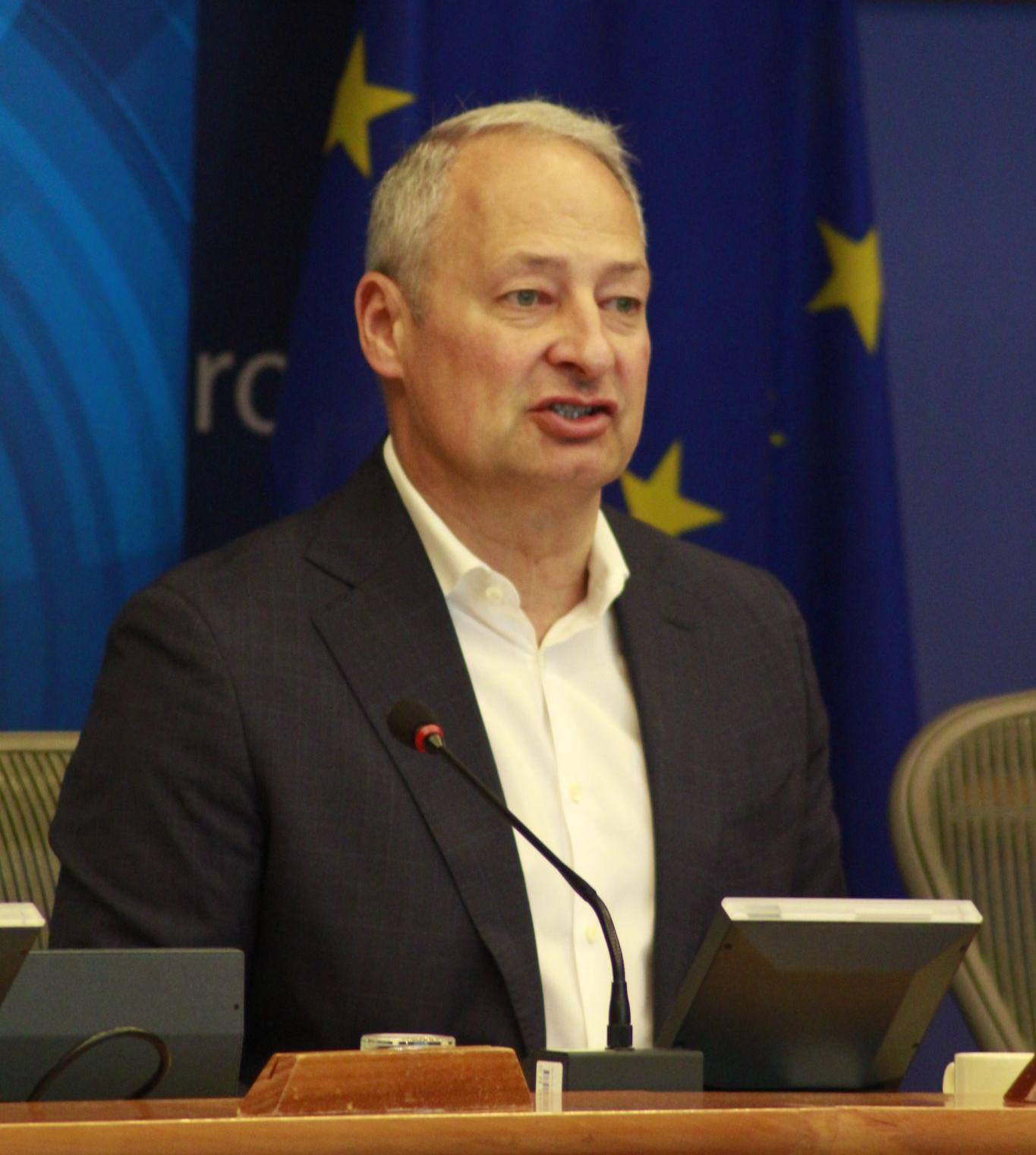
Railways, Resilience and Rules-Based Trade: MEP Andreas Schieder on the Future of EU–India Economic Cooperation
Updated: Jul 1

At the recent EICBI EU–India Leaders Conference 2026 in Brussels, the discussion focused on how the European Union and India can deepen their strategic partnership in a rapidly changing global economy. Trade figures, tariffs and market access remain important, but the relationship must be seen through a broader strategic lens.
India has become increasingly important for the European Union. As the fastest-growing economy among the G20 countries, it recorded growth of 7.4% in 2025 and continues on a strong economic direction. The country is also investing around USD 130 billion annually in infrastructure development, equal to roughly 3.1% of GDP. These investments should not only generate economic growth but also contribute to sustainable development and quality employment.

One area that stands out is railways. India is undertaking one of the world’s most ambitious railway modernisation programmes, with new freight corridors, high-speed rail connections, logistics hubs, digital signalling systems and sustainable transport solutions transforming mobility across the country. Railway infrastructure has become a backbone of economic development and a key driver of connectivity, efficiency and sustainability.
This is where Europe and especially Austria can contribute. Austrian expertise in railway technology, engineering, digital mobility solutions and sustainable transport systems aligns strongly with India’s priorities. By combining European know-how with India's scale and ambition, we can build long-term partnerships that strengthen resilient supply chains while ensuring that economic progress also delivers social progress.
According to an analysis by Bank Austria, around 5,000 industrial jobs in Austria already depend directly on demand from India. If the EU–India Free Trade Agreement leads to a doubling of Austrian exports, this could create around 5,000 additional industrial jobs, particularly in export-oriented regions such as Upper Austria and Styria.

As both India and the EU pursue ambitious sustainability goals, closer cooperation in these sectors can accelerate innovation, strengthen industrial competitiveness and support the transition towards more climate-neutral economies.
The EU–India Free Trade Agreement marks an important step. It is not only about reducing barriers to trade, but about building a framework for deeper economic cooperation, stronger connectivity and greater resilience in an uncertain global environment. This transformation must be people-centred, ensuring that workers benefit from new opportunities through investment in skills and education.
Looking ahead, infrastructure connectivity – and particularly railways – can become one of the defining pillars of the EU–India relations. By investing together in modern, sustainable and resilient transport networks, Europe and India can help shape a more connected and prosperous future for both regions.
This article is written by:-
Mr. Andreas Schiender
Member of the European Parliament/ Parliamentary Committee on Foreign affairs
Disclaimer
The views and opinions expressed in this article are those of the contributor and do not necessarily reflect the official policy, position, or editorial stance of EIJ. EIJ provides a platform for diverse perspectives and informed debate. Responsibility for the accuracy of facts and interpretations rests solely with the author.


Comments