Romania's Port of Constanta Could Expand IMEC's Reach into Europe, Says MEP Cristian Terhes
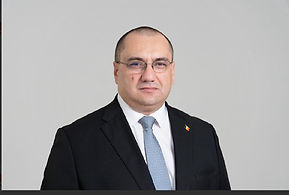
At the 7th EU India Leaders Conference organised by Europe India Centre for Business and Industry at the European Parliament on 9 June 2026, Cristian Terheș, Member of the European Parliament (ECR Group, Romania) and Member of the Committee on Foreign Affairs, delivered one of the conference's most infrastructure-focused interventions. His remarks focused on the India–Middle East–Europe Economic Corridor (IMEC), highlighting its potential to reshape trade connectivity between India and Europe while strengthening economic resilience across the wider region.
Peace Through Prosperity: The Foundation of Cooperation
Terheș framed the proposed India–EU Free Trade Agreement (FTA) within the broader principle of "peace through prosperity." He argued that economic cooperation has historically served as a foundation for peace by creating shared opportunities for growth and development. At a time when geopolitical tensions continue to affect global trade and international partnerships, he suggested that deeper economic integration between India and the European Union can contribute to greater stability and long-term prosperity.
He also stressed that the benefits of the FTA would extend beyond India and the European Union. Countries located along the proposed IMEC route, he noted, could also benefit from increased trade, investment, and connectivity, making the corridor a broader regional development initiative rather than a bilateral project alone.
IMEC as a Strategic Alternative for Global Trade
A key focus of Terheș's intervention was the growing need to diversify international trade routes. Referring to strategic chokepoints such as the Suez Canal and the Strait of Hormuz, he highlighted how recent disruptions have demonstrated the vulnerability of global supply chains.
In this context, he presented IMEC as a strategic alternative capable of improving the movement of goods between India and Europe while reducing dependence on traditional maritime routes. Rather than viewing the corridor solely as an infrastructure project, he positioned it as an important component of a more resilient and secure global trading system.

Expanding Europe's Connectivity Through Romania
One of the most distinctive aspects of Terheș's address was his emphasis on Romania's potential role within IMEC. He argued that discussions surrounding the corridor should not remain limited to Mediterranean ports alone.
Instead, he highlighted the Port of Constanța—the largest port on the Black Sea—as an important gateway that could strengthen the corridor's reach into Eastern Europe. He also pointed to the Danube River as a valuable but underutilised transport corridor capable of linking the Black Sea with Central and Western European markets.
Combined with rail connectivity, this multimodal network could improve logistics efficiency, reduce transportation costs, and enable more European inland countries to benefit from increased India–EU trade.
A Call for Strategic Vision and Political Cooperation
Beyond physical infrastructure, Terheș emphasised that projects such as IMEC require long-term strategic planning, sustained investment, and close political cooperation. He noted that while political parties may differ on various policy issues, there is broad consensus on the importance of strengthening Europe's relationship with India.
According to him, the success of both IMEC and the India–EU FTA will depend on governments, institutions, and industry working together with a shared vision to build stronger economic connections across the region.
A Once-in-a-Generation Opportunity
Concluding his remarks, Terheș described the India–EU FTA and IMEC as a "once-in-a-generation opportunity" to strengthen connectivity, diversify supply chains, and promote shared prosperity and, implicitly, peace. His intervention underscored that the future of the India–EU partnership will depend not only on lowering trade barriers but also on developing transport networks that are more resilient, inclusive, and geographically diverse.
By bringing Romania's strategic assets, including the Port of Constanța and the Danube corridor, into the broader IMEC conversation, Terheș offered a practical vision for expanding the benefits of the India–EU partnership beyond traditional trade gateways and towards a more integrated European logistics network, which can benefit especially the inland European countries.
This article is written by:-
Mr. Cristian Terhes
Member of European Parliament - Romania / EU Parliamentary Committee on Foreign Affairs
Disclaimer
The views and opinions expressed in this article are those of the contributor and do not necessarily reflect the official policy, position, or editorial stance of EIJ. EIJ provides a platform for diverse perspectives and informed debate. Responsibility for the accuracy of facts and interpretations rests solely with the author.


Comments