The ECSA Project: Connecting South Asia for Cheaper, Greener Power


On 9 July 2026, the European Union launched a €5 million regional energy project in Kathmandu, Nepal, taking a major step toward a connected and sustainable South Asia energy grid. Called the Energy Connectivity in South Asia (ECSA) project, this four-year plan aims to transform cross-border electricity trade and speed up the shift to renewable energy. The project, run by the French public agency Expertise France, brings together Bangladesh, Bhutan, India, Nepal, and Sri Lanka to provide affordable, clean, and reliable electricity to millions.
A Borderless Energy Market
South Asia has huge untapped renewable energy potential, but it is still one of the least connected regional electricity markets in the world. The ECSA programme hopes to change this by linking national power grids into a unified system. By trading electricity across borders, these countries can balance supply and demand much more easily, significantly lowering the risks of sudden power shortages.
This flexibility is key when adding more variable renewable energy to the grid. For example, the massive amounts of seasonal hydropower generated in the mountains of Nepal and Bhutan can be smoothly combined with the rapidly growing solar power coming from the Indian plains.
India’s Anchor Role
Because of its huge power market, strategic location, and existing power links, India is the natural centre for this regional network. India already trades a significant amount of electricity bilaterally with Nepal, Bhutan, and Bangladesh, providing a solid physical and institutional foundation for wider integration.
The ECSA project aims to build on these existing relationships by offering support for regulatory talks, technical teamwork, and investment planning.
Hervé Delphin, the outgoing Ambassador of the European Union to India and Bhutan, pointed out the economic upside of this move. He mentioned that linking these power grids faster will bring more abundant and cheaper energy to national networks, which is a major win for both businesses and everyday citizens.
The India-EU Strategic Partnership
The ECSA initiative is a perfect fit for the growing strategic ties between New Delhi and Brussels, especially when it comes to clean technology and sustainable infrastructure. India and the European Union already have a strong track record of working together through frameworks like the India-EU Clean Energy and Climate Partnership, which focuses on smart grids, energy efficiency, and renewable investments.
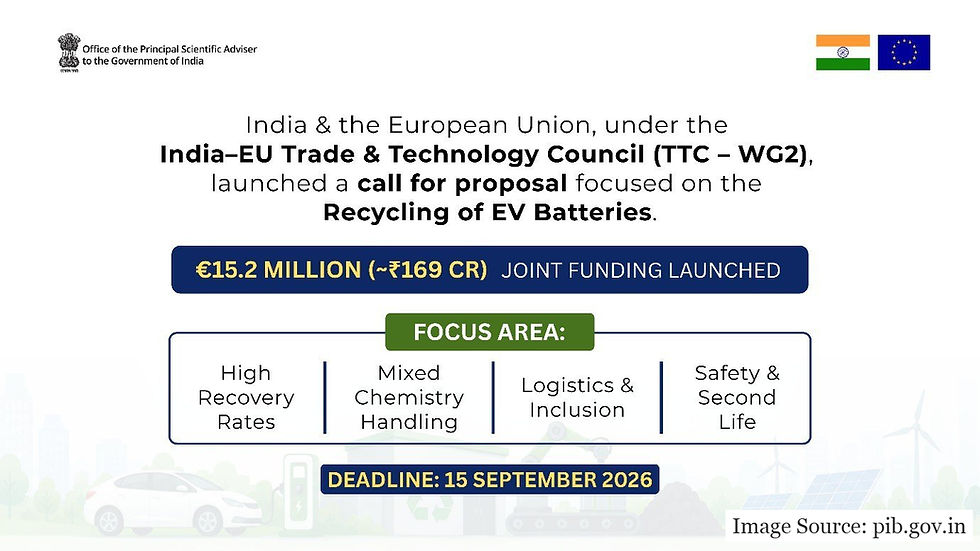
On top of that, the India-EU Trade and Technology Council heavily backs this energy cooperation. Recently, senior Indian leaders, including Subrahmanyam Jaishankar, India's Minister of External Affairs, and Piyush Goyal, India's Minister of Commerce and Industry, co-chaired council meetings in Brussels to push forward joint research in areas like green hydrogen, electric vehicle charging, and resilient supply chains.
The ECSA programme acts as a focused extension of these high-level diplomatic efforts, using European funding and technical know-how to support India's vision of a connected South Asian grid.
Sharing European Expertise
Creating a power grid that crosses national borders takes more than just physical infrastructure; it requires harmonised technical standards and clear market rules. The ECSA programme will help South Asia learn directly from top European regulatory institutions.
Crucial market knowledge will be shared by bodies like the European Network of Transmission System Operators for Electricity, the Agency for the Cooperation of Energy Regulators, and the European Energy Exchange. By adopting Europe's decades of experience in market coupling and allocating cross-border energy capacity, South Asian policymakers can set up reliable rules that guarantee secure data sharing and transparent pricing for everyone.
Funding Climate Action
The financial backing for the ECSA project comes from the European Union's Global Gateway strategy. Driven by a unified Team Europe approach, this strategy plans to gather up to €400 billion in public and private investments worldwide between 2021 and 2027 to build smart, clean, and secure global connections.
Jozef Síkela, the European Commissioner for International Partnerships, stated that the European Union is investing in cheaper, cleaner, and more reliable electricity to boost economic resilience and create major opportunities for local communities. Regional leaders have strongly endorsed this vision. Biraj Bhakta Shrestha, Nepal's Minister of Energy, Water Resources and Irrigation, welcomed the project by emphasising that better cross-border trade will help South Asian nations hit their developmental goals while vastly improving energy reliability and environmental sustainability.


Comments