Strategic Convergence in Évian: India and Germany Deepen Global Partnership

On 17 June 2026, Indian Prime Minister Narendra Modi met with German Chancellor Friedrich Merz on the sidelines of the G7 Summit in Évian, France. This meeting, representing their second bilateral dialogue of the year, provided an opportunity to review the growing momentum of the India-Germany Strategic Partnership. The discussions focused on reinforcing cooperation across key sectors, streamlining transit regulations for travellers, and evaluating critical global security challenges.

A Landmark Year for Bilateral Cooperation
The high-level meeting occurred during a historic milestone, as both nations celebrate the 75th anniversary of diplomatic ties in 2026.
Reaffirming their commitment to a closer alliance, the leaders expressed deep satisfaction with the rapid progress in bilateral engagements since the beginning of the year.
This momentum follows the successful official visit of Chancellor Merz to India in January 2026, which included strategic discussions in Gujarat and Bangalore.
The leaders reaffirmed their commitment to expand cooperation in trade and investment, green and sustainable development, technology, innovation, education, and mobility. They also highlighted joint initiatives in circular economy frameworks, information technology, and the enhancement of cultural links.
Enhancing Defence Alliances and Transit Ease
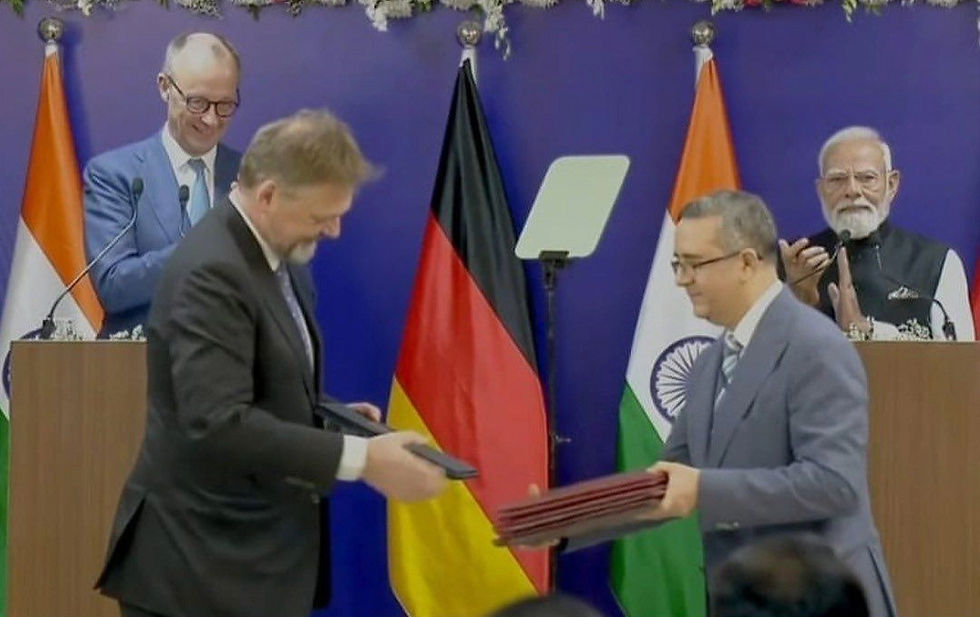
A major strategic milestone reviewed during the meeting was the signing of the Defence Industrial Cooperation Roadmap. Signed in April 2026 during a visit by the Indian Defence Minister to Berlin, this roadmap establishes a ten-year framework to institutionalise defence ties, focusing on the co-development and joint production of military capabilities.
Alongside security ties, the leaders welcomed the operationalisation of a transit visa waiver for Indian nationals transiting through German airports. Effective from 3 June 2026, this policy allows Indian passport holders connecting to non-Schengen destinations to transit through German hubs like Frankfurt and Munich without an airport transit visa, significantly improving international mobility.

Regional Stability and Future Inter-Governmental Consultations
The leaders also reviewed the conclusion of negotiations for the India-European Union Free Trade Agreement earlier in the year, which is expected to bolster long-term economic integration.
Turning to global affairs, Prime Minister Modi and Chancellor Merz exchanged views on regional developments of mutual interest, including the Russia-Ukraine conflict and the situation in West Asia.
They welcomed the understanding reached to end the conflict in West Asia and expressed strong support for diplomatic efforts to secure regional peace.
Looking ahead, Chancellor Merz invited Prime Minister Modi to Germany later this year for the 8th India-Germany Inter-Governmental Consultations to formalise these expanding strategic commitments.
Bilateral Progress Metrics in 2026
Strategic Sector | Specific Development | Impact on Relations |
Diplomatic Relations | 75th Anniversary celebration | Reaffirmed long-term strategic commitments. |
Defence & Security | Defence Industrial Cooperation Roadmap | Established 10-year co-development framework. |
Public Mobility | Transit visa waiver operationalised | Eliminated airport transit visa for Indian nationals. |
Economic Integration | Conclusion of India-EU FTA negotiations | Strengthened long-term trade dynamics. |
High-Level Forum | 8th Inter-Governmental Consultations | Scheduled for later in 2026 in Germany |



Comments